
Certified Document Translation: Digital & Apostille Ready
When people contact us about certified document translation, one of the most common questions we hear is: “Where can I bring my documents for translation?”
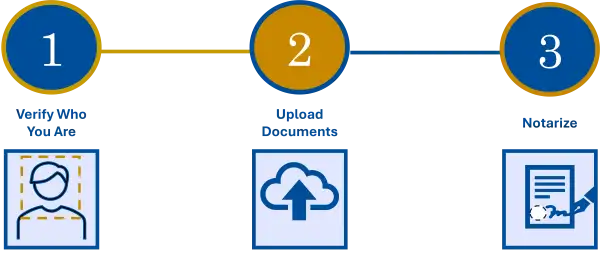
Need a document notarized without the travel? We help you determine whether remote online notarization is legally available for your situation, prepare for a secure video session when an authorized out-of-state notary may be appropriate, and understand what happens next.

An unsigned electronic document ready for review
An acceptable government-issued ID that can pass the platform’s credential analysis and identity-proofing process
Reliable Wi-Fi or internet access
A computer, tablet, or smartphone with a camera, microphone, and speakers
California has enacted a remote online notarization framework, but California notaries cannot perform RON yet. Under current California law, a signer must physically appear before a California notary for acknowledgments, jurats, and other notarial acts that require personal appearance. A live video image is not currently treated as personal appearance for a California notary.
Senate Bill 696 created California’s Online Notarization Act and is being implemented in stages. The remaining provisions that authorize California notaries to perform online notarizations become operative when the California Secretary of State certifies completion of the required technology project, or January 1, 2030, whichever occurs first, subject to the statute’s implementation provisions.
California law also recognizes certain notarial acts performed under the authority of another state or jurisdiction. Whether a remotely notarized document is appropriate for your transaction—and whether the receiving court, bank, title company, agency, or other recipient will accept it—should be confirmed before scheduling.
Official guidance:
California Secretary of State — Notary FAQs (SB 696 / RON)
California Secretary of State — SB 696 Customer Alert
California Secretary of State — 2026 Notary Public Handbook
Start with one of the documents we see most often. Because California notaries cannot currently perform RON, every request begins with a legal-eligibility and receiving-party review before any remote session is scheduled.
California document eligibility: Estate-planning documents and transactions with witness, recording, court, lender, title, or recipient-specific requirements may require in-person notarization. California notaries currently require physical appearance. Send your document for review before scheduling any remote service.
Document eligibility and acceptance vary by transaction and receiving authority.
Three quick checks prevent surprises after you upload or pay.
Ask the receiving agency, court, bank, or title company whether it accepts electronic notarization.
Estate-planning documents and some witness or destination requirements call for in-person service.
Your identity must pass the platform’s credential analysis and identity-proofing process.
If you prefer a notary to meet you in person instead of using remote online notarization, we can coordinate mobile appointments through our nationwide network of trusted notary partners. Mobile service is more expensive than RON because it includes travel, scheduling coordination, and face-to-face identity verification.
When people contact us about certified document translation, one of the most common questions we hear is: “Where can I bring my documents for translation?”
Explore other services available for this same location.