Emergency Apostille & Remote Options When Time Matters
When documents are needed overseas, time is usually the biggest pressure point. We work with individuals, families, attorneys, and businesses who are facing real deadlines—international travel, school enrollment, employment abroad, marriage, or legal filings outside the United States—where waiting weeks simply isn’t realistic.
In New York, apostille timelines are not one-size-fits-all. How a document is prepared, where it’s processed, and when it’s submitted all play a role. Knowing what options may be available before committing to a slower route can make a meaningful difference when timing matters.
This article is not meant to teach anyone how to navigate government offices. It’s written to explain what may be possible, depending on the situation. Every case is different, and the receiving authority always has the final say.
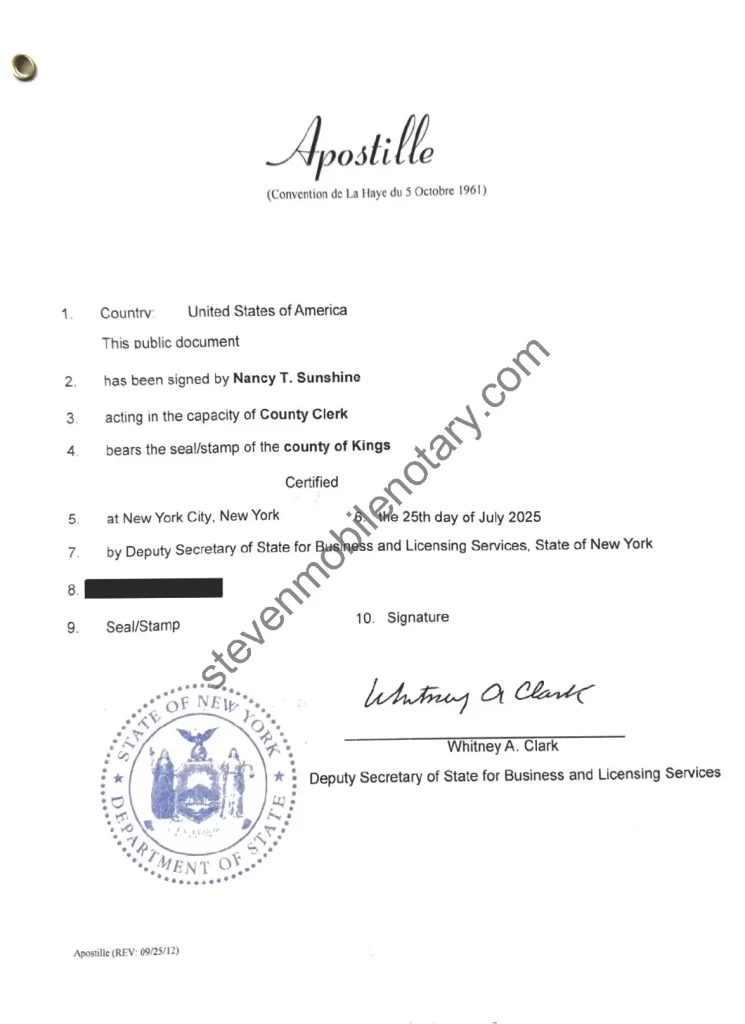
Emergency Apostille Situations We Commonly See
Over the years, urgent apostille requests in New York tend to fall into a few familiar categories:
- Last-minute international travel
- Foreign school or university deadlines
- Overseas employment or contractor onboarding
- Marriage or family matters abroad.
- Legal or corporate filings required outside the U.S.
In situations like these, most clients aren’t interested in learning a process. They’re looking for a viable path that fits the deadline, if one exists.
Standard Mail-In Apostille Timelines in New York
As of January 2026, standard mail-in apostille submissions sent to New York State offices outside of New York City—including Albany—often take several weeks to complete. In practice, timelines are commonly reported in the range of two to six weeks, depending on volume and staffing at the time documents are received.
Those timelines aren’t fixed. At certain points in the year, state offices may catch up on backlogs and move faster. At other times—especially around academic cycles or heavy travel seasons—processing can slow down.
Because mail-in timelines can fluctuate, emergency situations often require a different evaluation.
Same-Day Apostille Considerations in New York City
For clients located in New York City, there may be additional considerations.
Due to proximity to state offices and the availability of in-person processing, same-day apostille situations may be possible in certain NYC-based cases, depending on document readiness, timing, and current office conditions. These scenarios are highly time-sensitive and usually require early preparation.
Same-day availability is never guaranteed. Every case must be evaluated individually.
The Role of Remote Online Notarization (RON)
In qualifying situations, Remote Online Notarization (RON) can play an important role in preparing a document for apostille on a tighter timeline.
When permitted and accepted, a remote notarization completed early in the business day may allow a document to become apostille-ready within the same-day processing window. This does not apply to every document or destination, and acceptance by the receiving authority must always be confirmed first.
RON isn’t a shortcut. It’s one of several tools to consider when timing is critical.
Why New York State RON May Be Suitable in International Cases
New York’s RON framework can be especially helpful in international and time-sensitive situations, largely because of how identity verification is handled.
New York-authorized RON sessions use knowledge-based authentication (KBA) along with layered identity checks. This allows signers to complete notarizations remotely without appearing in person, which can be important when someone is outside the United States or unable to attend an in-person appointment on short notice.
New York also permits the use of valid international passports as acceptable identification in remote notarization sessions. This is particularly relevant for foreign nationals, dual citizens, and international clients who may not have a U.S.-issued ID. Where applicable, biometric and additional verification measures further support the integrity of the notarization.
None of these factors guarantees acceptance by a receiving authority, but they can make New York State RON a practical option to evaluate when documents need to be prepared quickly, and traditional notarization isn’t feasible.
As always, acceptance by the destination country, institution, or agency remains the controlling factor.
Acceptance Always Comes First
No matter how urgent the situation feels, the receiving party ultimately decides what they will accept.
Before moving forward, we look at:
- The destination country
- Whether the document falls under the Hague Apostille Convention
- Whether electronic or remote methods are accepted
- Whether the timeline realistically aligns with the client’s deadline
If acceptance cannot be reasonably confirmed, we do not proceed.
How We Help in Time-Sensitive New York Apostille Cases
Our role isn’t to hand clients a checklist. It’s to manage the process and advise on viable options.
In urgent apostille situations, we typically:
- Review the document and destination requirements.
- Identify time-sensitive constraints
- Evaluate in-state, NYC-based, or remote options where permitted.
- Coordinate notarization, apostille handling, and delivery.
- Communicate clearly so expectations remain realistic.
Every case is handled individually. There is no one-size-fits-all solution.
Final Thought
If you’re facing a time-sensitive apostille need in New York, understanding what’s possible before committing to a slower path can make all the difference.
We focus on solutions, not guesswork—and we only move forward when the receiving party’s acceptance supports the approach.
If your matter is urgent, we can review your situation and advise on available options.